


Jack's Blog

Looking Directly Somewhere Else
 Monday, October 28, 2013
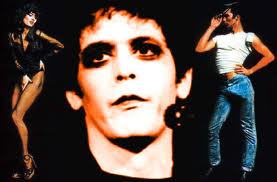 Jack Rikess
September 2012
I’ll chalk it up to the thrill of finding the perfect parking space.
Draped from every lamppost in the Mission, I imagine the city then, were silken advertisements hyping a new show coming this fall to the Museum of Modern Art. The rippling banners announce that there’s going to be a twenty year retrospective of the photography of one T.I. Horwitz.
T.I? I would call him Tito Ira but only as a joke. As I remember, he despised being called Ira unless you were his mother. T.I? Maybe it’s his idea of conforming.
It is just a funny coincidence. This is right out of the fiction that one reads in the magazines waiting for your primary care physician.
I cannot help get the feeling like his breezy eyes were following me on the sidewalk.
I’m sure he’s on Facebook. I should call him or write him or poke him. However old friends can get together. I could tell him I had to add another bookcase. He’s probably on Kindle. We could talk about Chabon’s new book. Talk like pros. Talk the way we used to. Argue. Joke. Argue some more and then go across the street to the Abby for a stout. I could tell him about Jen and the living room remodeling project. I bet he would be surprise how much hardware cost. The 1930s soda fountain handles we ordered from Restoration. Or the trip we took hiking in the rainforest in Costa Rica a few years back. Artist types probably enjoy hearing about normal people.
The noontime traffic is sluggish but steady as I wait for a break. I end up having to do a slow dance around these approaching hipster-kids in a late model convertible. The kids have the live version of the Velvet Underground’s ‘Rock and Roll’ playing very loud. They cruise by, eyeing the balding white guy in Dockers probably thinking he couldn’t possibly understand why we like our music so loud? I could tell them and that I was a fan. But why?
You know her life was saved by rock 'n' roll. Despite all the amputations you know you could just go out/ And dance to the rock 'n' roll station. Pure Poetry.
That Kinko’s on Geary? Once about a time it was a huge record store full of these rounds objects called albums. Tito and I worked together there for like five years. Alright, two, maybe three, but it’s where I received my urban education, so like college, it felt like five years.
From the very beginning Tito and I distilled music to its purest content. If we’re talking music, you could have driven a truck in, loaded it with vinyl and drove out, we wouldn’t have cared.
Our biggest debate occurred around the time Pavarotti’s just got big in America and the Pretenders had struck gold with ‘Brass in Pocket.’ Around 1980 or ‘81, I think. We had this ongoing discussion, almost argument, about what was the most influential American band ever. Finally, after weeks of deliberation, the two of us reached an agreement. We would have taken a serrated 45 for a blood oath right there, below the Sheena Easton display, declaring that the Velvet Underground is the most influential band of all-time.
Tito Horwitz worships Lou Reed, although true to the anti-hero mystique, he would never admit it. Like Lou, Tito wore the same type black biker boots with chains wrapped around the top of the boots. Lou was into photography so Tito begins shooting junkies in the Tenderloin and turns his one sensible closet into a darkroom. Naturally he despises the Lou I know because that meant the general public likes them. He favored the albums that only sold five units. Metal Machine Music, The Bells, the stuff that really droned.

I never knew what I didn’t know until I met Tito.
First he was shocked that I was unfamiliar with the works of the writers who came out of post-World War I Canada. Who evens knows post-anything-Canada and Robertson Davis besides Tito? And now me? Davis wrote The Deptford Trilogy. Then I had to learn about Entropy and all things entropic. Statistical Thermodynamics. Could entropy be applied to wind power as an argument against? Tito said alternative energy would never work because of Entropy. That led to Eastern Physics with the Dance of the Wu Ling Masters and The Way of Doing Nothing while doing actually a lot. Books, books and more books interspersed with Tito’s newest passion, punk music. He’d drag me to the clubs on Broadway on work nights, he in well worn-out basic black and me in fresh-bought, neatly creased black.
Another weird aspect of Tito that may surprise some was the wife. That he had a wife before he was old enough to rent a car. Tito the freethinker and social critic and all-around deviant were one of my first friends to be married. Tito had that James Dean thing early on. He was one of those guys who the more he ignored women, they more they wanted him. But he got married. He’s just had to be that different.
He was always trying to find meaning or the hidden meaning in things. Tito had a habit of asking me why this or why that to things that I normally wouldn’t have questioned. “Why do you think African-Americans carry those huge boom boxes? Hmm. Never thought about it? Because they want to be heard! Why do you think women go to the bathroom in pairs? You ever wondered? The reason is, because when women go to the loo alone, they get hassled and hit on by a gauntlet of soused pigs that’s never going figure out why they don’t get laid. That’s why!”
There were always the whys. I never grew up asking why. My father in one of his more humane moments would say, “You could go broke asking why.”
I would tell him that’s he over thinks everything. He’d say not possible.
That brings me to the broken-hearts. It was the end of summer in San Francisco, just when it starts to warm up before winter. One day, these overly tanned teenage girls plunge into the record store. Ripe from camp these teenagers are demanding the album that was the rage of that summer. This would be the Go-Go’s debut album. If you’re old enough to remember, it was one of the best-selling albums of the year. It was a bestseller everywhere…but at our store.
These fragile girls, having being imprisoned at camp, denying them the pleasure of owning the album that all their friends had, had to have the new Go-Go’s album. Tito stands there with a straight face at the cash register saying, “ Sorry, the Go-Go’s broke up earlier this month and some guy from their record company came and took all their albums away. There wasn’t anything we could do. I told ‘em it wasn’t fair, too.”
He did that for weeks with every gaggle that came in dying for the new Go-Go’s album. No matter how hard or how many cried. He wouldn’t sell.
I can still see him, sober as a cop at the register, immune to the teenagers’ meltdowns.
He really did almost pull me into his world. For a short time, until he moved to New York, I became his concrete third wheel.
Between work and dinner with him and his wife, or tours of the city while he constantly clicked away on his single-reflex camera-I was there. In turn, my life was being unconsciously reformed with each new experience. As everything was hauntingly new and slightly abstract in its presentation in those days, I never knew what was happening exactly. We all just supposed to go with it. Those days were like skiing down the Matterhorn without poles. It was all on coming and you barely knew it was over before it was. Somehow Tito held on.
I’m five years shy of sixty, doing pretty good. I married Jen after the first one left. Still working for a Mr. Gorman and now, his sons at their car dealership, where I’ve risen to the position as major domo of the loans department. I’m safe in my position seeing how the Gorman boys have very little desire for learning the intricate philosophies behind the veritable five and ten year loans available for your Chrysler vehicles. Instead sons Bobby and Teddy Gorman are more interested in setting the record for highest bar tab in Vegas at their sales meetings then a future in qualifying loans.
I’m safe on auto row. Safe enough to break away to the Mission to check out one of those hip, new restaurants if that’s what I want.
After taking my time with a Chicken Regular, no hot sauce, I drop my empty plastic basket on the stack of empties that’s haphazardly being built on the top of the trash bin as I leave El Toro.
Then walking back to the car I see all the signs I’d missed and then some.
In the window of a coffeehouse, there’s a picket fence of various posters of upcoming events that frames the bottom. Sure enough, T.I. Horwitz, San Francisco’s own, stands two feet by eighteen inches in his own advertisement. The camera’s catches Tito nonchalantly in a very chi-chi gallery appearing tremendously cool leaning against the wall surrounded by a few of his more popular portraits. From up above on the wall, behind a pair of lowered shades peering down on Tito is Lou.
Lou Reed. It all started with Lou Reed and the Velvet Underground. This is according to two record store geeks who were known to argue an afternoon away about almost anything and everything and then some.
In the car mirrors I can see Tito’s flags getting slapped in the wind as I attempt to weave into traffic from my parking space. I can’t believe the way people drive in the city. What’s next, no police?
Finally squeezing in front of a boat of a Ford, my company car lurches forward only to have the traffic come to a complete halt. Immediately my mind tries to fill the void. Stuck in traffic, I try to calculate the pile of my staff’s loan applications on my desk waiting to be approved and still leave early?
I haven’t spoken to Tito in thirty years. Would he even remember…the record store?
There are questions and there are answers. Sometimes we know the answer long before asking the question.
I know the wife likes the Velvet Underground’s Walk on the Wild Side and that one song of theirs in Trainspotting but the whole catalogue, especially the less accessible Velvets, no way, Jose. Somehow the upside of Heroin put to music isn’t Jen’s cup of tea. She’s rather have a root canal before we plug I’m waiting for my man into our Sunday Morning Pancake playlist on the iThing. Sting and Josh Groban catch a pretty good workout at our house. Thank you very much.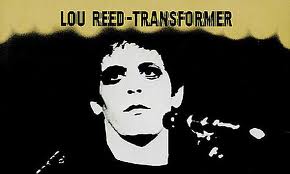
Sometimes it is just best to leave things alone.
Why I like Anonymous
Tuesday, June 5, 2012 
At the end of the Eighties, sneaking right into the new decade, I just started working in the field of Convention Services. It was my job at trade shows being staged throughout the country, to set up booths, provide electrical connections, and generally oversee that the vendors’ booths are operational come opening bell.
I would soon graduate to be in charge of Internet Connections. I had absolutely no idea what I was doing. I didn’t own a computer. I didn’t believe in computing as a way life, yet. Suffice to say, T-1’s, cold rooms, and learning how to punch a line down in hub were still years away for me.
But the clients, the vendors knew what they needed. An outside connection was desirable in order to access the Internet that could handle massive bandwidth to drive the various devices that ran the bells and whistles that was new in ’94. At this time booths had banners advertising “Fat 32” as the future, you could luxuriate in the spacious CompuServe lounge, and there was a small section showing the future with a thing called “Windows 95.”
Much of the computer-based trade shows happen in Las Vegas. That is where I received my computer education and then some.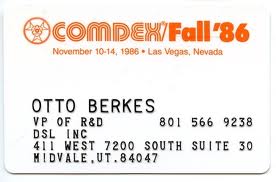
It was the night before the opening day of Comdex. Comdex was if not Las Vegas’ largest convention, in the Top Three. It was the trade show of all trade shows when it came to the latest advancements in the computing industry. Some broadband was to be installed through the telephone lines, actually the punch block at a Strip hotel where Comdex was being held. I needed to have an open line or channel for the phone guy to install the temporary outside line that was going to handle all the needs of the vendors for the convention. I had no idea what he needed, where to drop the line, and then what to do with that line in order to get it to the people who needed it.
There’s this kid there working for another vendor. He just happens to be in a day early. This kid, Josh, was 17 years old. He’d been working for the telecommunications industry and had invented the cable box with the keypad on the top. I don’t why that was such a big deal, but it made a millionaire out of Josh.
Josh took over for me when he saw I knew nothing yet was in charge. He did more than assist the phone guy; he basically did most of the work, to make sure it was done correctly.
That would go on every year for the next five or so. Not to say I didn’t learn, but with Josh as a mentor, I learned more than just how to punch done phone cord and set a router.
I learned how to hack.
More about that later…
What is reality? A question that has plagued thinking men and women for centuries with a variety of answers provided. The earliest most basic answer is, I’m thinking right now, so this must be reality.

The Hindis and the holy, and the people such as myself, not holy but in agreement with those who are, believe the real reality is inside. What is living on in your head and heart concurrently to either form an unconscious value system or mode of operation that directs your beliefs, thus filtering what you see, and in turn, believing what you’re seeing is real.

This means you can either accept that the world is not the Matrix and it is real or perhaps, you’re in some form of a prison, yet in your mind, you are free.
As much as that reality is true for me, the world is entirely has a different point of view.
I believe in the world, at least in the United States, there is only one reality: The one you can prove in a court of law. Everything else falls by the wayside by comparison. You can argue or debate any point you want to. Unless it is math or provable science, (and then you may still have challenges) the solution could be moot. Not so in a court of law. There is evidence that permissible and evidence not. The truth may not apply in a court of law, only what you can prove.
This seems to be to be almost the ultimate reality. You could then squabble about who has the best access to justice, the rich unfairly? But then you may never get an answer that is final and concrete like in a trial or by a judge’s final verdict.
In terms of ambiguity, a court of law, for right or wrong, determines what is right and wrong with as many as the facts at hand that can be assembled and permissible.
In a court of law, this is the one place where the truth isn’t served conditionally but what you can prove comprehensively. That is a pretty harsh definition of reality, but one that comes the closest to the veracity of the purpose it is supposed to provide.
Between a court of law and what we believe in our heads, our realities bounce off what we want to believe and what sometimes we’re called upon to have to prove.
And now I believe there’s a third reality at play, hackers.
The more I read about the group or person called “Anonymous,” the more I respect what they are doing.
When I was working Comdex in Las Vegas, I learned about the inbred flaws of computing. I could go on and on about this, but it the very reason computers can be hacked. They were released with bugs and holes but in order not to lose money and units to the ever-present competition, computers are sold with gaping holes that allow even the most novice user to hack, something.
Correct me if I’m wrong my fellow Geeks, but the reason you kids can only tweet 147 characters, or whatever that is, is because the limitations of hexadecimal system. And it goes on from there with many weaknesses that are inherent when using Windows, Linux and more.
I love what Anonymous is doing. No one is safe. As technology steps up, so do the cheats and modifiers provided by a subculture of hackers.
My friend, Josh would later turn me on to Def-Com, the hackers’ convention that took place yearly in Vegas. Def-Com by far is the wildest affair that I had ever witness and that’s saying a lot when it comes to putting on shows in Sin City.
These guys and few gals would take over a hotel, paying big money just like any other convention or trade show, just like anyone else, and then it was organize mayhem. They had a game like ‘Capture the Flag,’ only it was two teams trying to hack each other’s firewall to capture the other team’s hard drive. There was a fun endeavor named, “Spot the Fed.” Because most of the country’s computer geniuses were in attendance, the Feds wanted to know who the players were, plus they were there for recruitment. Def-Com was the MIT and Harvard of hackers. These were people who were hacking for the love of it. For the sport of it! Only a few were doing bad things.
If you are an average person who doesn’t do bad or evil things, and only use your computer for email, porn, and Facebook, y’know, your average American, you don’t get hacked by hackers. They’re only using your computer as a front. Going through a lot of IP addresses and a bunch of metrics only to end up at your computer so if one tries to find the hacker, they only are led back to you.
Pretty harmless stuff when compared to how Disney, Nickelodeon, and other websites legally hack you by recording keystrokes and web history. That’s a discussion for another day.
I cannot possible recap the last twenty years of my apprenticeship on the steps of 2600 Hacker Place, just to say, I’ve had to stop everything because I got too close to being an outlaw exposed. And as we all know, to live outside the law, you must be honest.
I discovered from my experiences at Def-Com that a whole world operated without my knowledge, and more importantly, to the straight world’s familiarity.
Guys like Priest, Morlock, and Josh taught me protocols and etiquette that one must know to move in the hacker world without getting fucked.
You have to understand that there is a gauntlet you have to go through to enter. And you will be hacked. You will be hacked because their Ju-Ju is stronger than yours. Until you realized that, bad thing s will happen to any device you have connected to the digital world.
I couldn’t hang. I couldn’t be part of that network because not only was it so competitive but you’re expected to rise with the tide of the newest hacks. Because if you don’t, that’s right: you’re hacked.
I sailed solo, onto the shores of file sharing and pirating. Arhhhh! But I quit that too once I realized that there are never enough gigs out there for storage once you set sail for those sandy, free shores. Plus, you can get too deep once you understand the technology.
Why pay when you can get it for free? Take music. You can’t, I mean, you can. You can take it for free, if you want. And it is very easy to do, especially when websites almost beckon you. But always remember, the more free something is, the more hacked your computer is going to be.
I had to stop downloading because I lost the line between honesty and stupidity. The price of manufacturing music was going down, yet the retail price continued to climb. Why pay for something when they could be fairer and charge you a discounted price because of their lowered expense? They’re being greedy, why shouldn’t I?
Because they have the law and on some level, I know that it is wrong. That is why I gave it up and had only done it for about an hour one day while high an Ambient and Vicks Night Blend.
Anonymous works above the law, above our courts, if done correctly, the hacker holds the highest position that we have. The Keeper of the Keys.
The Pentagon has the most severe firewall there is and they are afraid of hackers. Bill Gates can’t stop them. Hackers or Anonymous, not to say they are one and the same, can go anywhere they want. And if they can’t, it is just a matter of time until they do. The only defense there is, is to rotate codes or passwords so fast that it is virtually impossible to keep up. There is no defense if a hacker wants in or you.
I am a Jungian. I believe in the Inner World. I also respect the Court of Law as a place that I do not understand but know they have the final say.
Up and beyond that are Anonymous and the people like that. They can shine a light in where few can go or gain access to. Sometimes I believe they are our only hope against richer and stronger powers that are unscrupulous and corrupt.
Every day we lose more rights as humans and libertarians. Just the fact that Sarah Palin introduced the concept of “Death Panels” and they’re now becoming true through the overseer of our life expectancies, the Health Care Industry.
Who’s looking out for our welfare?
The lawyer that I can afford or provided by the courts? Those thoughts in my heads or a person I confide in that’s out of a book?
Thank you, Anonymous, and the people who make you up and fill in that mask. Thank you hackers for having our backs and teaching manufactures that if you’re going to send to market a product that can be exploited, you’ll take advantage of those openings.
Bruce Springsteen's Wrecking Ball
Thursday, March 8, 2012 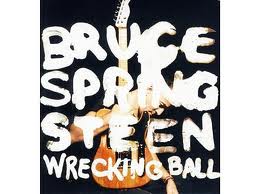 What kind of relationship can a music fan have with their idols? What do they owe us and in return, besides for buying their product or getting it somehow-what do we owe them?
I first saw Bruce Springsteen in the spring of 1975 in Austin, Texas. The experience was as freakazoid as they come. A positively archetypal East-Coast band performing in one of the most laid-back venues (The Armadillo World Headquarters) there ever was, in front of cowboys, hippies, and me, for as long as I could handle it.
I left midway. The guitars, the drums, the assault of the band on stage seemingly coming out straight for the audience was too much for my Joni Mitchell-honed ears. I was into Neil Young and all things mellow and ponderous.
The Bruce Springsteen experience was something I wasn’t quite ready for, yet.
Now, I’ve seen Bruce and his cohorts about forty or fifty times since that weekend so long ago. While I’ve left the house for most of the major album release tours, I’ve also been fortunate enough to see Bruce in small clubs (The Old Waldorf, SF and others) plus his departures and side-projects (The John Kerry concerts and showing up for friend’s gigs.)
So in a way, I feel like I know Bruce. Of course, I’ve never met the guy.
This past Tuesday, for the first time in years, I went down to my local record store and purchased Bruce’s newest CD, “Wrecking Ball.” It reminded me of the old days when Tuesdays were known for more than meeting with Morrie.
It was exciting and reminded me how much things have changed. While I walked the three blocks to the local record store, which happens to be one of the largest in the United States, my girlfriend downloaded the iTunes version to her phone. I was analogging it as my girlfriend’s digitized world barely blinked before her iThing was opening up with “We Take Care of Our Own.”
Okay, it’s been two days and here’s what I think…
On the initial listen, it sounds like a Greatest Hits package #6 or “Springsteen Essentials Vol. IV” from the very near future. The music is first rate and extremely likeable. That’s actually been the problem of some of Bruce’s music in the last decade, almost since the crucial mark of 9-11; his music is anthem-like and comforting in a very Bruce kind of way.
In the last couple of albums, the call and response that developed between Bruce and the live audience seemed a little forced. Maybe that’s not the correct usage. It felt like Bruce wrote songs to include the audience. That if there was a way to have the audience chime in, or figure out their part, it incorporated itself into that Parthenon of seemly endless other songs that connects Bruce to his audience and then back again to the stage. Besides for giving new life from the studio version, it further cements the bond between Bruce and his people.
I do not see any reason to write in the possible audience reaction when there are so many opportunities for that to happen organically with Bruce and his music. All Bruce has to do is with Oldsters like me is point the mic towards us and we’re singing the second verse of his old stuff when he says it is our turn.
The other noticeable drawback, if that is the correct choice of words, is the eclectic nature of the album. Again, here’s another example of not winning for losing. When Bruce does a session or theme album like the Depression Era-soaked “Nebraska,” we complain about how one-note it is. It becomes how we can’t get our little heads around what he’s trying to say unless each songs relates to one theme.
On Wrecking Ball, Bruce is all over the place, not really residing in one genre too long. I wouldn’t even attempt to break each song down and give my interpretation to what I think the author had in mind. I don’t think it is that kind of an album.
This is what it is like for me.
Being caught in the trappings of old age and what I bring to it.
With Bruce, it is like meeting an old friend whose first wife passed away from a long debilitating disease. We remember his previous life with reverence and the selfishness of our own thoughts of being a part of a young couple’s beginning journey and the times we shared together.
Not that our friend has remarried, to a great partner, we’re sure- we remain optimistic, happy for his happiness, and try not to let our feelings of missing something that’s not there, to get in our way of enjoying the moment.
With the passing of Clarence and Danny, there are shadows on the stage that may never go away for some of us. That we can’t enjoy what we’re seeing and hearing because of our love for what was, knowing that it is gone forever.
With Wrecking Ball, Bruce again is at the top of his game. It is really our problem with who he is that is the impediment. How can a rich guy sing about what’s it is like for the 99%? At one point a character in a song talks about if he had a gun, he’d shoot the bosses and bankers down. I believed him. And with much of the album, when Bruce sings and directs us to watch out for our own, and he has done consistently since he’s grown-up way down by the River, so many albums ago, I know he’s being serious.
I personally bring so much baggage now, I don’t even know if it is fair to review this album. I’d be remiss if I made snide comments about Bruce mostly just because I can?
Anyone can say he’s an old out of touch, a silk-collar guy pretending he’s blue. But is he?
As Bruce does his thing unceremoniously as he always has- playing locally in Jersey and can be seen with Tom Morello’s latest project, and going out on tours with his big band sound-we Tweet and talk about him like we know what we’re speaking about.
How about that Wrecking Ball is a diverse and complicated project where Bruce Springsteen picked out 12 songs that he wanted to share with his peeps to show them where he’s at.
Done.
Leave it there.
If you need to hear Thunder Road in another form, it ain’t going to happen. For some reason, Wrecking Ball, the song, sounds most like old Bruce and I’m not even sure what that is anymore.
I heard that Bruce wrote most of this before the Occupy Movement was happening. That makes sense. Bruce has been writing stuff like this since Darkness. His message isn’t new. Maybe that’s why old dudes like me stay so close to him. He’s consistent and reliable.
The Stones are celebrating their fifty year anniversary this year. Name one song you would like to hear slow, stripped-down, between you and the band.
With Bruce that’s a given and you never know which song is going to be that game-changer for you. That one he did with Born in the USA, draining the anthem rock out of it and playing blues-style the way it was meant to be heard.
The real question other people ask is-Can Bruce Springsteen at this point in his career, still be the voice of the Common Man?
I don’t think that’s fair to ask. I think what may be truer is- Can you relate to Bruce and his music as you once did, or have you changed too much from the person who first jumped into that Camero with the Hurst on the floor to go racing in the streets?
I didn’t get tickets for Bruce’s upcoming concert. I thought about it and when I decided to do it, the show sold out. Life moves pretty fast.
Yesterday it was reported that Lady Gaga has the most followers on Twitter than any other human being or animal or mineral on this Earth. What did her monumental tweet say? “Check out the new Springsteen album.”
Another lifetime ago I walked out on Bruce. Now I can’t get a ticket.
But I’m content with my memories, all of Bruce’s music that I have stored and acquired, now with the eco-sound new CD I bought legitimately this past week, I have another entry for the Springsteen canon.
Bruce can really pick and choose like very few artists can. Those twelve songs on his new CD, they’re on there for a reason. To find fault or imperfection, I don’t know if it is worth it.
The very first listen, the very, very first hearing before I knew what I was hearing, I thought I was listening to the soundtrack to “The Waltons-the Movie,” if the movie remake had a two hundred dollar budget to work with and half was going to music production. It was like an Appalachian Spring Gone Baroque!
I found it easy to find fault and mock. But mostly what I was doing was comparing. Comparing these songs of new to my old memories of yore and yesterday when I thought I really knew what was what.
I’ve barely been to New Jersey or to the behind the scenes of late-night carnivals or hunger strikes or being stranded on the beach cold and in love yet Bruce has taken me to all these places.
Dylan likes a relative who can do no wrong and I will always accept him as he wants to be.
Bruce challenges and then makes us decide for ourselves which way we want to go.
I resist the temptation to fit Bruce Springsteen into my world and tell you how his music is a certain way. That would be bullshit.
It is a journey. You have to find out some things on your own.
Wrecking Ball is a great album. If you can’t see that, you’re too close to something. Either your ego that is unwilling to change or the fear that the world changes and you can’t tell until someone tells you that it’s changed.
There’s a consistent message to Bruce. All great artists have a style or a theme that permeates their work since the beginnings. I do not see Bruce any different. The benchmarks change. The sounds and producers change. Band members are no longer with us.
When great art hits a certain level, maybe it is best to let it go, tell some friends what you think, but let the guy be if your message he’s old and too rich to feel.
Bruce puts himself out there on display with his words and music. Maybe it is no coincidence that the title of his latest album is a vehicle of destruction. Maybe the Wrecking Ball isn’t against society and the Man but it is against us and our beliefs that we want to believe are safe.
Howard Zinn said you can’t be neutral on a moving train.
When you listen to Bruce now-who are you? Someone who lives in Neverland, somewhere near the Jersey shore in a judgmental shack plastered with pictures of Rosalita, Jenny, and a bunch of Marys ? Or a person who has grown with Bruce and doesn’t resent change but grows and matures like a song that been played for forty years, finding new chords and notes to mined, giving the listener another point of view that always been there.
But that is the artist job.
To show us what we’re afraid of seeing on our own.
The Great New Republican Test
Friday, February 3, 2012 The Great New Republican Test
1) Only Democrats have abortions.
- True
- False
2) The Wealthy are smarter.
- True
- False
3) The larger the church, the closer to God you are.
- True
- False
4) All problems in America started January, 20th 2009.
- True
- False
5) It is now acceptable to “bear false witness against your neighbor.”
- True
- False
6) A Republican president has never increased the National Budget, only Democrats.
a. True
b. False
7) If Social Security was privatized as President George W. Bush requested, it would be gone now.
a. True
b. False
8) Family Values change yearly.
a. True
b. False
9) After three decades of tax cuts for the wealthy, these cuts have directly resulted in job creation and a better society for all.
a. True
b. False
10) The only redeeming benefit of Science is to know how to repair a fishing boat in Alaska; otherwise it is just a bunch of arguable facts.
a. True
b. False
11) The single greatest threat to marriage.
a. Gays
b. Gays
c. Gays
d. Divorce
12) The United States fought in Iraq and Afghanistan to:
a. To protect the Muslim people.
b. No fucking way?
13) The greater and more disastrous the event, (BP oil spill, Rupert Murdoch hacking 9/11 victims, Japan’s nuclear meltdown) the less it seems that it happen.
a. True
b. False
14) The less intelligent states of America need to take legislative action against the possibility of Sharia Law being enacted in their state, because they’re actually that stupid of a state and in times of a crisis, lose their redneck minds.
a. True
b. False
15) All Republican presidents, once out of office, concern themselves with humanitarian affairs and work towards the betterment of the World. 
a. True
b. False
16) Any news that isn’t on Fox News is wrong.
a. True
b. False
17) Americans are more than willing to pick fruit, clean hotel rooms and watch our children for minimum wage, if only given the opportunity.
a. True
b. False
18) That the American flag is produced in China by slave labor is a perfect example of outsourcing.
a. True
b. False
19) The Oklahoma City bombing was the work of four people.
a. True
b. False
20) The World Trade Center attack was the work of:
a. 19 Operatives
b. al-Qaeda
c. The Entire Arab World
21) Life begins at conception and Human Rights end at birth.
a. True
b. False
22) Supporting the Troops only applies when the troops are overseas.
a. True
b. False
23) The Constitution can be suspended in times of crisis.
a. True
b. False
24) Italian and German Americans should have been intern in prison camps alongside Japanese-Americans during World War II, as was suggested by the military at the time.
a. True
b. False
25) Republican administrations have been more successful for America than Democratic presidential administrations.
a. True
b. False
26) Healthcare just isn’t for everyone.
a. True
b. False
27) The poor can take care of themselves, the Rich need assistance in the form of subsidies and tax loopholes.
a. True
b. False
28) America needs to return to an indescribable period of time that no one is sure of exactly when that is, but it is before now, when times were better and life was more suited to a Republican’s sensibilities.
a. True
b. False